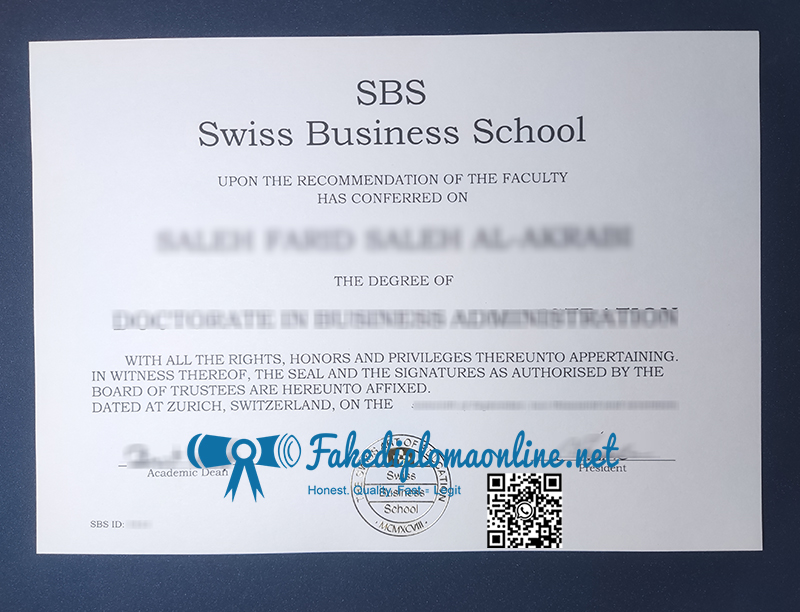
Swiss Business School diploma
Title: A Comprehensive Guide to Swiss Business School (SBS): Programs, Campus, and Global Recognition
Whether you are looking to pivot your career or sharpen your leadership skills, choosing the right institution is a defining moment. Swiss Business School (SBS) stands out as a premier destination for business education in the heart of Europe. WhatsApp: You can contact us here. This guide explores everything from campus life to the high social recognition of the SBS diploma.
1. Prime Location and Modern Campus
First and foremost, we must look at the school’s strategic positioning. Located in the vibrant city of Zurich, Swiss Business School (SBS) offers students a unique blend of academic excellence and professional opportunity. Since Zurich acts as the financial hub of Switzerland, students find themselves at the doorstep of global commerce.
-
Location: The main campus sits in Kloten, which planners strategically placed near the Zurich International Airport and the city center.
-
Campus Area: Although SBS maintains a focused, boutique-style campus, it provides state-of-the-art facilities. These include high-tech lecture halls, collaborative study spaces, and a comprehensive digital library.
-
Transportation:
-
Train: A 5-minute walk takes you to the nearest S-Bahn station, which connects to Zurich HB (Main Station) in under 15 minutes.
-
Air: The proximity to Zurich Airport (ZRH) greatly benefits international students and visiting executive lecturers.
-
Local Transport: Switzerland’s legendary public transport system ensures that students can commute reliably from anywhere in the canton.
-
2. Specialized Degree Programs
Moving on to the academic core, SBS is renowned for its practical approach to business. The faculty specifically designs the curriculum to meet the demands of the modern global economy.
Key Program Features:
-
Bachelor of Business Administration (BBA): A foundational program covering marketing, finance, and HR.
-
Master of Business Administration (MBA): A flagship course that experts rank highly for its ROI.
-
Doctor of Business Administration (DBA): This path targets executives who wish to contribute original research to management fields.
Professional Specializations:
| Specialization | Key Focus Areas | Target Career |
| International Management | Global trade, cross-cultural leadership | Export Manager, CEO |
| Marketing & Sales | Digital strategy, consumer behavior | CMO, Brand Manager |
| Applied Finance | Investment banking, risk management | Financial Analyst, CFO |
| Entrepreneurship | Venture capital, startup scaling | Business Owner, Consultant |
3. The Advantages of an SBS Education
Beyond the classroom, several factors set this institution apart. Why do students choose the Swiss Business School diploma over other European institutions? The answer lies in the Swiss Quality of education.
-
Dual Accreditation: Both the ACBSP and IACBE accredit SBS. This ensures the curriculum meets rigorous international quality standards.
-
Practical Learning: Unlike traditional theory-heavy universities, SBS utilizes the Case Study Method. This allows students to solve real-world corporate dilemmas actively.
-
Global Networking: With students from over 50 countries, you build a global professional network from day one.
-
Small Class Sizes: A low student-to-faculty ratio guarantees personalized mentorship.
4. Scholarship Opportunities and Financial Aid
Furthermore, SBS actively seeks to attract top talent regardless of financial background. The administration offers several scholarship tiers for the 2024–2026 academic years.
-
Academic Excellence Scholarship: This reward goes to students who maintain a GPA above 3.5.
-
Leadership Scholarship: The committee awards this to those with proven management experience.
-
Global Diversity Grant: This initiative supports a multicultural student body from underrepresented regions.
-
Early Bird Discount: Students receive a 5%–10% reduction if they complete enrollment 6 months early.
5. Career Outcomes and Employment Statistics
Ultimately, the value of a Swiss Business School diploma manifests in the professional success of its alumni. Recent data highlights the strength of the SBS network.
| Metric | Statistical Data |
| Employment Rate | 92% within 6 months of graduation |
| Average Salary Increase | 35% post-MBA |
| International Placement | 60% of graduates work abroad |
| Top Hiring Sectors | Finance, Tech, Luxury Goods |
6. Importance and Social Recognition of the SBS Diploma
Holding an SBS diploma is more than just a credential; it signals your capability to the global market.
Global Ranking & Prestige:
The SBS MBA consistently appears in rankings by CEO Magazine and QS World University Rankings. In Switzerland, people associate the “Swiss Made” label with integrity and excellence.
Social Recognition:
Major multinational corporations (MNCs) like Nestlé, UBS, and Google frequently hire Swiss-trained talent. Consequently, the diploma serves as a “Global Passport,” opening doors to high-level management positions worldwide.
7. Essential Enrollment Notes
If you plan to apply, please consider these crucial requirements:
-
Language Proficiency: You need a minimum IELTS score of 6.5.
-
Work Experience: MBA and DBA programs usually require 2–5 years of professional history.
-
Visa Process: International students should initiate their Swiss student visa application at least 3 months in advance.
-
Interviews: The admissions team conducts video interviews to assess your career goals and motivation.
8. Common FAQ (Frequently Asked Questions)
1. Does the industry recognize the SBS diploma globally?
Yes, multiple international bodies accredit SBS, and employers worldwide highly value its academic standards.
2. Can I work in Switzerland while I study?
International students can work up to 15 hours per week, provided they maintain their academic progress.
3. What is the average age of an MBA student?
Most students are between 28 and 35, which creates a mature and professional classroom atmosphere.
4. Does SBS offer online study options?
Yes, SBS provides “Flex” and Online versions for working professionals who cannot move to Zurich.
5. How does the school assist with job placement?
The Career Development Office provides resume workshops, mock interviews, and access to an exclusive alumni job portal.
6. How much does it cost to live in Zurich?
Students typically need between CHF 1,800 and CHF 2,500 per month for housing, food, and insurance.