canada diploma replacement
Lost Your Canadian University Diploma? Here’s What to Do Next
Losing a university diploma can feel stressful. It often happens when moving, traveling, or reorganizing documents. However, the situation is more common than most people think. More importantly, solutions are available. WhatsApp: You can contact us here
In Canada, universities provide official replacement diplomas. In addition, supporting documents such as transcripts or enrollment confirmations can also be requested. Therefore, even if your original certificate is gone, Canadian University Diploma your academic history is not lost.
This guide explains everything clearly. You will learn how to request a replacement, what to expect, and how to avoid delays.
Why Diplomas Get Lost or Damaged
Before exploring solutions, it helps to understand the problem.
Diplomas are usually issued once at graduation. Because of that, they are often stored away for years. Over time, several issues may occur:
- Documents may be misplaced during relocation
- Paper certificates can be damaged by water or heat
- Files may be accidentally discarded
- Storage conditions may lead to fading or wear
As a result, many graduates eventually need a replacement or supporting documentation.
Can You Replace a Canadian University Diploma?
Yes, most Canadian universities offer official replacement diplomas. However, policies vary slightly by institution.
In general:
- A replacement diploma can be issued upon request
- The new document usually states “replacement” or “reissued”
- Processing times range from 2 to 8 weeks
- Fees typically range from $30 to $150
Because each university has its own system, it is important to check the official registrar’s office guidelines.
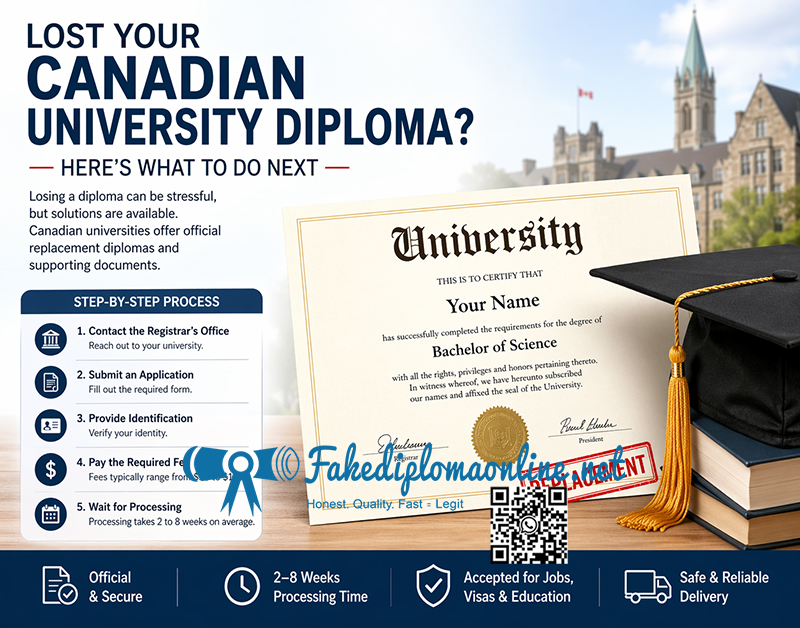
Step-by-Step Process to Request a Replacement
Although procedures differ slightly, the process is usually straightforward.
1. Contact the Registrar’s Office
First, visit your university’s official website. Then, locate the registrar or records department.
2. Submit an Application
Most institutions require a formal request. This can often be completed online. In some cases, a printed form must be submitted.
3. Provide Identification
To protect your records, identity verification is required. Therefore, a valid ID must be provided.
4. Pay the Required Fee
A processing fee is usually charged. Payment methods often include credit card or bank transfer.
5. Wait for Processing
Once submitted, the request is processed. Delivery time depends on location and shipping method.
What If You Need Documents Quickly?
Sometimes, waiting several weeks is not practical. For example:
- A job application deadline is approaching
- Visa or immigration paperwork is required
- Further education applications are pending
In such cases, alternative documentation can help.
Alternative Documents That Can Be Used
While waiting for a replacement diploma, several official documents may be accepted:
- Academic transcripts
- Graduation confirmation letters
- Enrollment verification documents
These documents are issued faster in many cases. Therefore, they can be used as temporary proof of education.
Tips to Avoid Delays in Your Application
To ensure a smooth process, follow these tips:
- Double-check all personal details before submission
- Use the same name as your graduation records
- Submit clear identification documents
- Choose tracked shipping if available
In addition, it is helpful to apply early if deadlines are involved.
How to Keep Your New Diploma Safe
Once you receive your replacement diploma, proper storage is essential.
Here are some simple steps:
- Store the document in a protective folder
- Keep it in a dry, cool place
- Avoid direct sunlight exposure
- Create digital copies for backup
By doing this, future issues can be prevented.
Digital Copies vs Physical Certificates
In today’s digital world, many institutions also offer electronic records.
Digital copies are useful because:
- They are easy to access anytime
- They can be shared quickly
- They reduce the risk of loss
However, physical diplomas are still important for formal display and certain official uses.
Therefore, it is best to keep both versions when possible.
Common Mistakes to Avoid
When requesting a replacement diploma, some mistakes can slow down the process.
Avoid the following:
- Submitting incomplete applications
- Using incorrect contact details
- Ignoring university-specific requirements
- Waiting until the last minute
By planning ahead, these issues can be avoided easily.
Final Thoughts
Losing a diploma can feel overwhelming at first. However, the solution is usually straightforward. Canadian universities maintain permanent academic records. Because of that, replacements can always be requested.
At the same time, understanding your options is important. Official replacements take time, but alternative documents can help in urgent situations.
Most importantly, once your documents are restored, keeping them safe should be a priority.
Need Help Navigating the Process?
If you are unsure where to start, guidance can make a big difference. From understanding requirements to organizing your request, having a clear plan saves time and reduces stress.
Start by identifying your university’s process. Then, prepare your documents carefully. Finally, submit your request as early as possible.
With the right approach, your replacement diploma can be secured without unnecessary delays.