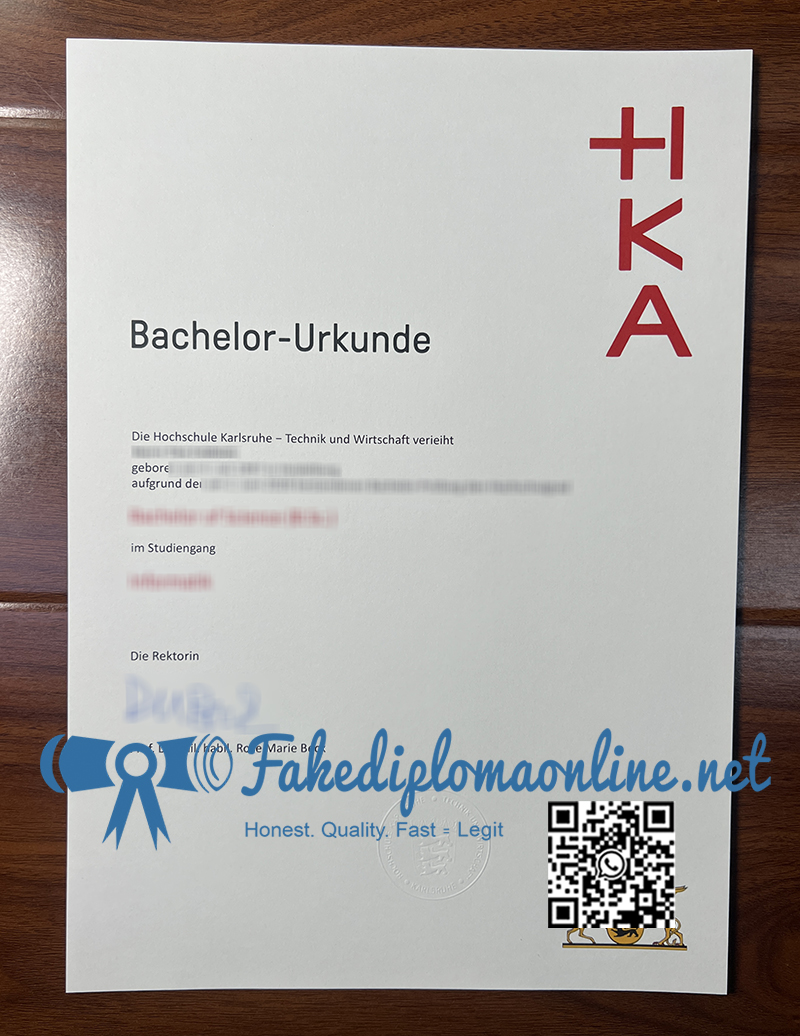
Hochschule Karlsruhe diploma
The Value of a Hochschule Karlsruhe Diploma in the Global Job Market
Are you looking to advance your career with a degree from one of Germany’s premier technical hubs? If so, the Hochschule Karlsruhe (HKA)—University of Applied Sciences—stands as a cornerstone of engineering and business excellence. As a senior SEO specialist, I have analyzed why an HKA diploma remains a top-tier asset for international students and professionals alike.WhatsApp: You can contact us here.
Strategic Location: At the Heart of European Innovation
First and foremost, location plays a vital role in your educational success. Nestled in the sunny, tech-heavy state of Baden-Württemberg, Hochschule Karlsruhe sits perfectly within Germany’s “Silicon Valley.”
-
The Campus: You will find the main campus right next to the historic Karlsruhe Palace and the lush Hardtwald forest.
-
Space for Growth: The university manages approximately 10 hectares of land, blending historic architecture with state-of-the-art laboratory facilities.
-
Seamless Transportation: Since Karlsruhe pioneered the “Tram-Train” model, students enjoy effortless travel via the KVV transport network. Consequently, you can reach the Black Forest, France, or Stuttgart in under an hour.
Why Students Choose HKA: Key Statistics
Before we dive into the curriculum, we should examine the hard data. HKA consistently secures top positions in the Wirtschaftswoche and CHE University Rankings due to its practical approach.
| Faculty | Specialization | Key Industry Highlight |
| Mechanical Engineering | Automotive & Robotics | Ranked #1 for reputation among German HR managers. |
| Computer Science | AI & Cybersecurity | Focuses heavily on hands-on software development. |
| Management & Engineering | Supply Chain & Logistics | Bridges the gap between technology and leadership. |
| Electrical Engineering | Renewable Energy | Maintains direct partnerships with Siemens and Bosch. |
Unrivaled Professional Advantages
A Hochschule Karlsruhe diploma represents more than just academic achievement; it acts as a gateway to the German “Mittelstand” and global corporations. Here is why the industry respects this credential:
-
Practical Integration: Unlike traditional universities, HKA requires students to complete mandatory internship semesters. Therefore, you will graduate with at least 6 months of corporate experience.
-
Industry Networking: Because the school maintains links with over 150 partner companies, many students secure job offers before they even submit their final thesis.
-
High Starting Salaries: On average, graduates from the Computer Science and Engineering faculties report starting salaries between €52,000 and €60,000.
-
Modern Facilities: The university invests millions annually in “Smart Labs.” This allows you to work on real-world industrial IoT projects using the latest equipment.
Admission Insights: What You Need to Know
Securing your spot at HKA requires careful preparation. Because the university maintains such high standards, competition for “Numerus Clausus” (NC) programs remains intense.
-
Language Proficiency: Most Bachelor’s programs require TestDaF 4. However, the university offers an increasing number of Master’s programs in English (C1 level).
-
Validation: You must process international diplomas through uni-assist. For this reason, you should translate and notarize your transcripts early.
-
Deadlines: Remember that the Winter Semester deadline is July 15th, while the Summer Semester closes on January 15th.
Common Questions About Hochschule Karlsruhe (FAQ)
1. Is Karlsruhe an expensive city for students?
While it is more affordable than Munich, you should budget around €850–€950 per month for rent, insurance, and food.
2. Can I work while studying for my HKA diploma?
Yes, absolutely. International students can work 140 full days per year. Furthermore, the university’s Career Service helps you find student assistant roles.
3. What makes the HKA diploma different from a TU diploma?
A Technical University (TU) emphasizes theory. In contrast, HKA focuses on Applied Sciences, meaning you spend more time in labs solving actual industry problems.
4. Are there tuition fees for international students?
In this region, non-EU students typically pay €1,500 per semester.
5. How vibrant is campus life?
With over 7,000 students, the campus stays active. You can join numerous initiatives, ranging from the Formula Student racing team to various music ensembles.